Natural-language query language for structured web data extraction
Each tool is evaluated against our methodology using public docs, vendor demos, and hands-on testing.
Some links on this page are affiliate links. We earn a commission if you sign up – at no additional cost to you. Our editorial assessment is independent and never paid. How we review.
What is AgentQL?
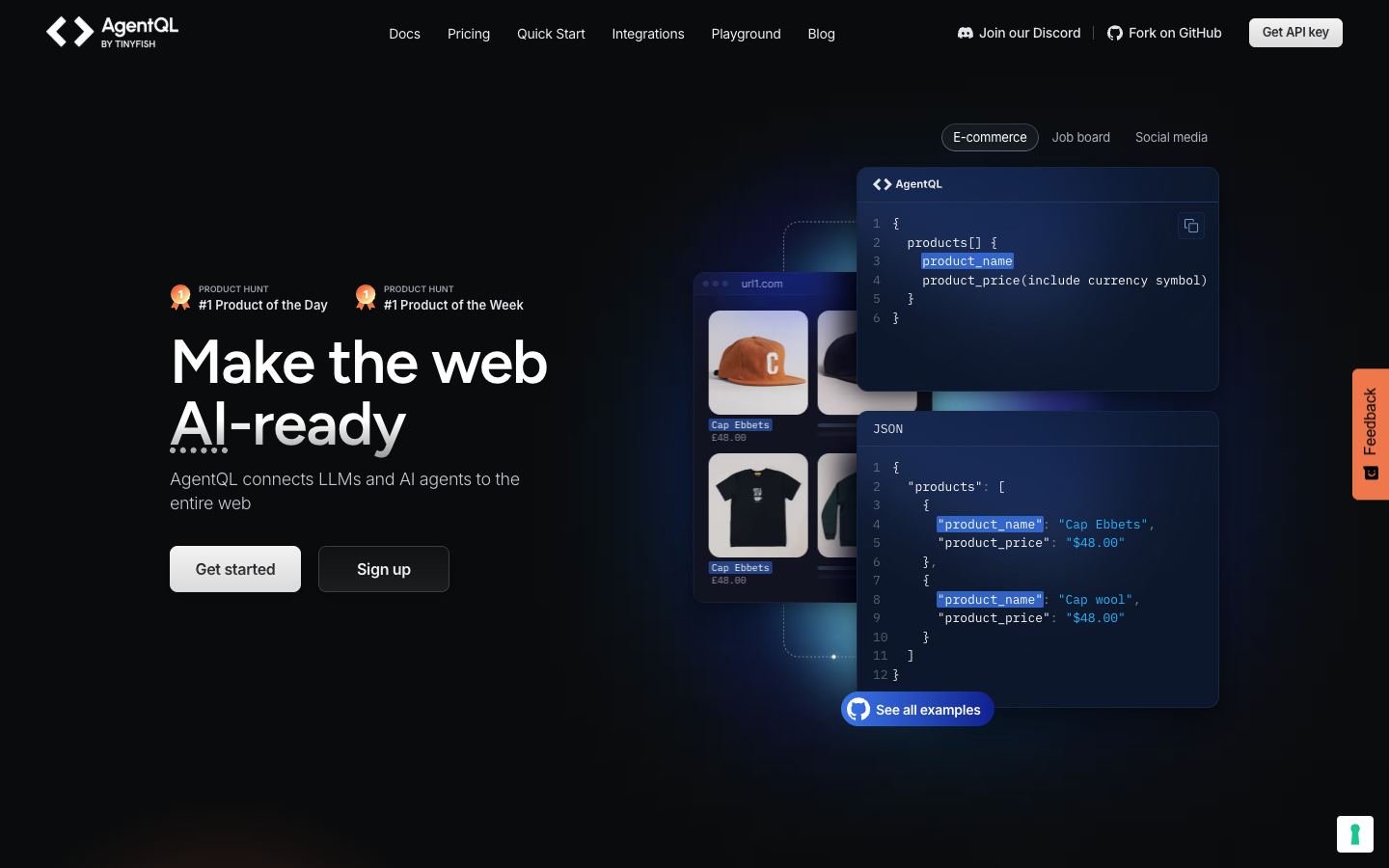
AgentQL is a data extraction and browser automation tool from TinyFish that replaces XPath and CSS selectors with natural-language queries. It provides Python and JavaScript SDKs built on Playwright for headless browser automation, a Chrome extension for debugging queries, a browserless REST API for extracting public data without running a browser, and PDF table and data parsing. The core SDK is open source on GitHub under the MIT license.
Our verdict
AgentQL fits teams that want to automate browser interactions and pull structured data using natural-language queries instead of maintaining brittle CSS or XPath selectors, and the MIT-licensed core SDK leaves room to self-host the extraction logic. It is built around Playwright-driven browser automation rather than managed scraping infrastructure, so teams that need large-scale proxy rotation or anti-bot handling will need to add that separately.
Categories:
AI extraction tools sit between a raw page and your database: you describe the fields you want, and a model returns structured JSON or LLM-ready markdown without hand-written selectors. They hold up well when page layouts change often, at the cost of per-request model spend and the occasional wrong field.
Open-source API that scrapes and crawls sites into LLM-ready data
Freemium·Jul 2026·AI Extraction
AI-powered API that turns any webpage into structured JSON via prompts
Freemium·Jul 2026·AI Extraction
AI platform for extracting and monitoring structured web data
Paid·Jul 2026·AI Extraction
How AgentQL compares
FirecrawlFirecrawl also turns live websites into structured, LLM-ready data through an API, overlapping with AgentQL's browserless extraction option.
ScrapeGraphAIScrapeGraphAI likewise uses natural-language prompts and an open-source Python library to pull structured data from web pages, rather than selector-based scraping.
KadoaKadoa targets the same structured-extraction-from-websites use case and positions itself as an alternative to writing and maintaining custom scrapers or selectors.