What is Selenium?
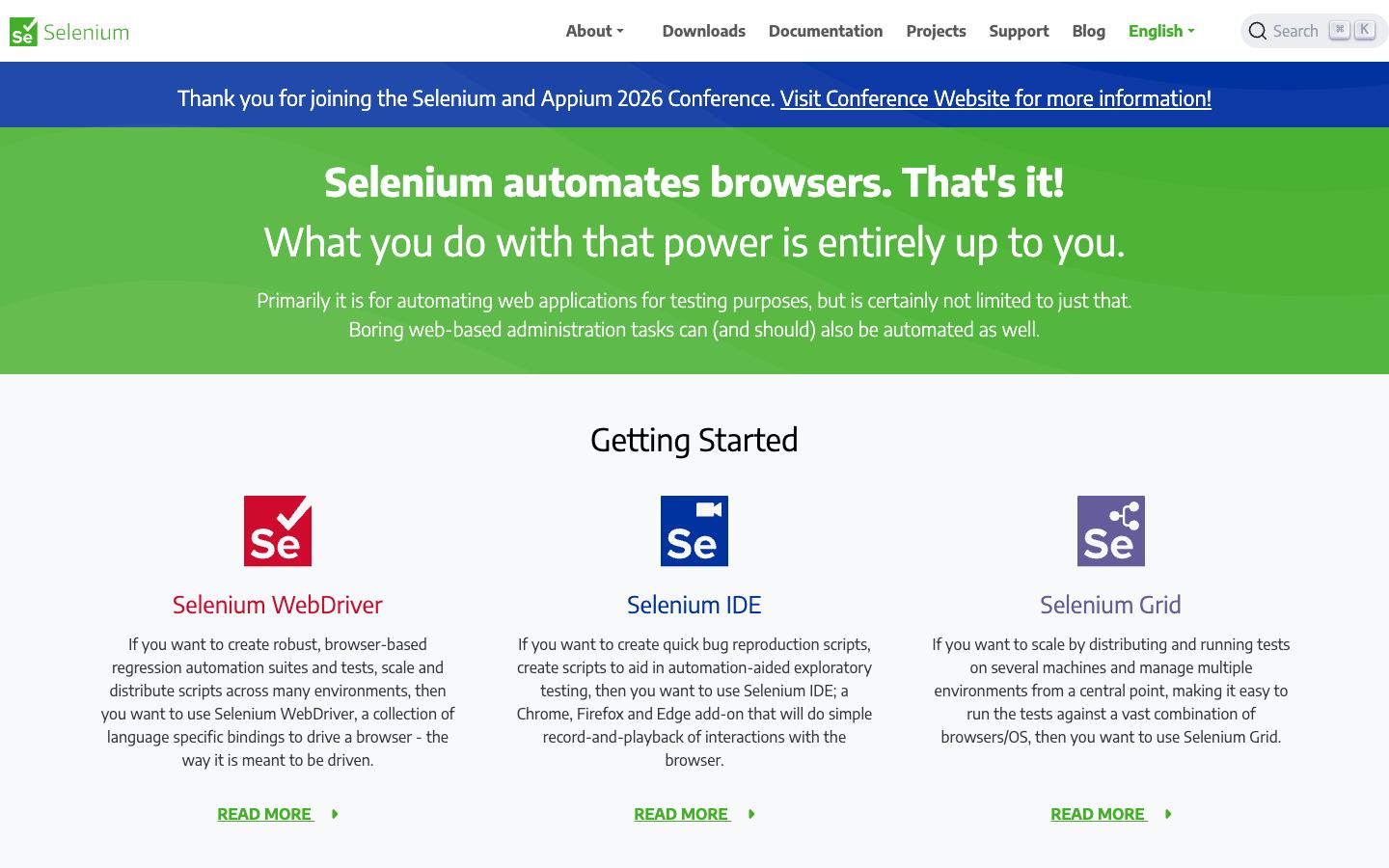
Selenium is an open-source browser automation framework, originally released in 2004 and now governed by the Software Freedom Conservancy. It has three main components: WebDriver, language bindings for Java, Python, C#, JavaScript/Node, Ruby, and Kotlin that implement the W3C WebDriver spec; Grid, which distributes browser sessions across machines for parallel or cross-browser runs; and IDE, a record-and-playback extension for Chrome, Firefox, and Edge. It is primarily used for automated testing of web applications, though it also sees wide use in web scraping and other browser-based automation.
Our verdict
Selenium's WebDriver bindings across six languages and its Grid for distributed runs suit teams already doing cross-browser testing who also want to scrape from the same stack. Its API is more verbose for scraping-only work than tools like Playwright or Puppeteer, since Selenium's design centers on testing rather than data extraction.
Categories:
Crawling frameworks give engineering teams full control over their pipeline: where it runs, how it scales, and what it collects. The trade is that anti-bot work and infrastructure become your problem rather than a vendor's, which is why they pair well with a proxy network.